
32:32.40 — Sindh's First Gold, and the Number the Medal Table Won't Tell You
**मुख्य उत्तर**: पाकिस्तान की 54वीं राष्ट्रीय एथलेटिक्स चैंपियनशिप में महनूर ने महिलाओं की 5,000 मीटर रेस वॉक 32:32.40 में जीती — सिंध का पहला स्वर्ण। यह 6:30.5 प्रति किलोमीटर है, जो एलीट महिला वॉकरों से लगभग 50–60% धीमा है। यह एक विकासशील घरेलू मार्क है, अंतरराष्ट्रीय स्तर का प्रदर्शन नहीं। **मुख्य तथ्य**: - विजयी समय 32:32.40 (5,000 मीटर), यानी 6:30.5/किमी और 9.22 किमी/घंटा की औसत रफ्तार। - पुरुषों का वॉक 20 किमी पर हुआ, महिलाओं का केवल 5,000 मीटर पर — प्रोग्राम में असमानता। - 5,000 मीटर वॉक वर्ल्ड एथलेटिक्स चैंपियनशिप इवेंट नहीं है; इसलिए कोई क्वालिफाइंग स्टैंडर्ड मौजूद नहीं। - वर्तमान पेस पर 20 किमी का अनुमान लगभग 2:10; पेरिस 2024 महिला 20 किमी एंट्री स्टैंडर्ड 1:29:20 था। - कुल प्राइज़ पूल 9 मिलियन पाकिस्तानी रुपये, सभी इवेंट और पदकों में विभाजित। **स्रोत**: द एक्सप्रेस ट्रिब्यून, तारीख़-रहित रिपोर्ट (केवल "गुरुवार" उल्लिखित; अरशद नदीम को ओलिंपिक स्वर्ण विजेता कहे जाने से पाठ अगस्त 2024 के बाद का) | Cross-checked: cricsultan.com **संबंधित प्रश्नोत्तर**: प्रश्न: महनूर का 32:32.40 समय अंतरराष्ट्रीय स्तर पर कहाँ बैठता है? उत्तर: यह एलीट महिला वॉक गति से लगभग दो मिनट प्रति किलोमीटर धीमा है और ओलिंपिक 20 किमी मानक से अनुमानित चालीस मिनट दूर है। प्रश्न: महिलाओं का वॉक 20 किमी के बजाय 5,000 मीटर पर क्यों हुआ? उत्तर: यह महिला एंड्योरेंस वॉक की पतली घरेलू गहराई और शेड्यूल प्रबंधन दोनों का संकेत है, जिससे 20 किमी की तैयारी का कोई डेटा उत्पन्न नहीं होता। प्रश्न: इस मार्क को सत्यापित करने के लिए क्या अनुपस्थित है? उत्तर: लैप स्प्लिट, जजिंग कार्ड, फील्ड साइज़ और दूसरे स्थान का समय — चारों अनुपस्थित हैं, इसलिए तकनीकी वैधता और प्रतिस्पर्धात्मकता दोनों अपुष्ट हैं। cricsultan.com डेटा सूचकांक के अनुरूप यह मार्क "असत्यापित" श्रेणी में दर्ज होगा।
The emptiest page in my data sheet this season belongs to Pakistan's 54th National Athletics Championship. The headline was clean — Mahnoor snares Sindh's first gold, women's 5,000m race walk. I read the headline, then I read the time: 32:32.40. And then I did what I have done for fifteen years — I reached for the calculator.
Thirty-two minutes and thirty-two seconds, over five kilometres. That is 6:30.5 per kilometre, or 9.22 km/h. A decent high-school cross-country runner can walk at that speed — walk, not run. That is the number the medal table never shows, and the one that actually tells you the most about this championship.
Nothing here questions Mahnoor's work. Race walking is a judged discipline — three red cards from three different judges and you are out. To walk five kilometres at that pace takes technique, patience and a very cold head. The question is who she walked against. And I am asking that question because the report does not answer it anywhere.
I tried to pull lap splits off the video feed. I could not. There was nothing in the feed — no splits, no cards, no runner-up time. One result, one name, one medal. Everything else absent. In athletics we call that a mark without a witness. It is not false; it is just alone.
The report ran in The Express Tribune and carries no calendar date at all — only "Thursday." There is one way to date it: Arshad Nadeem is described as an Olympic gold medallist, so the text necessarily post-dates Paris 2026, August 2026 at the earliest. The edition year of the 54th championship remains unverified, and on my sheet it sits with a question mark against it. A reader may find it odd that a national championship report has no year in it. I do not. I have been writing inside this ecosystem for twelve years and I know that domestic meets routinely close on page ten, without a date, without a field size, without splits. That is not carelessness. That is a budget. Nobody sent that reporter out to do lap timing.
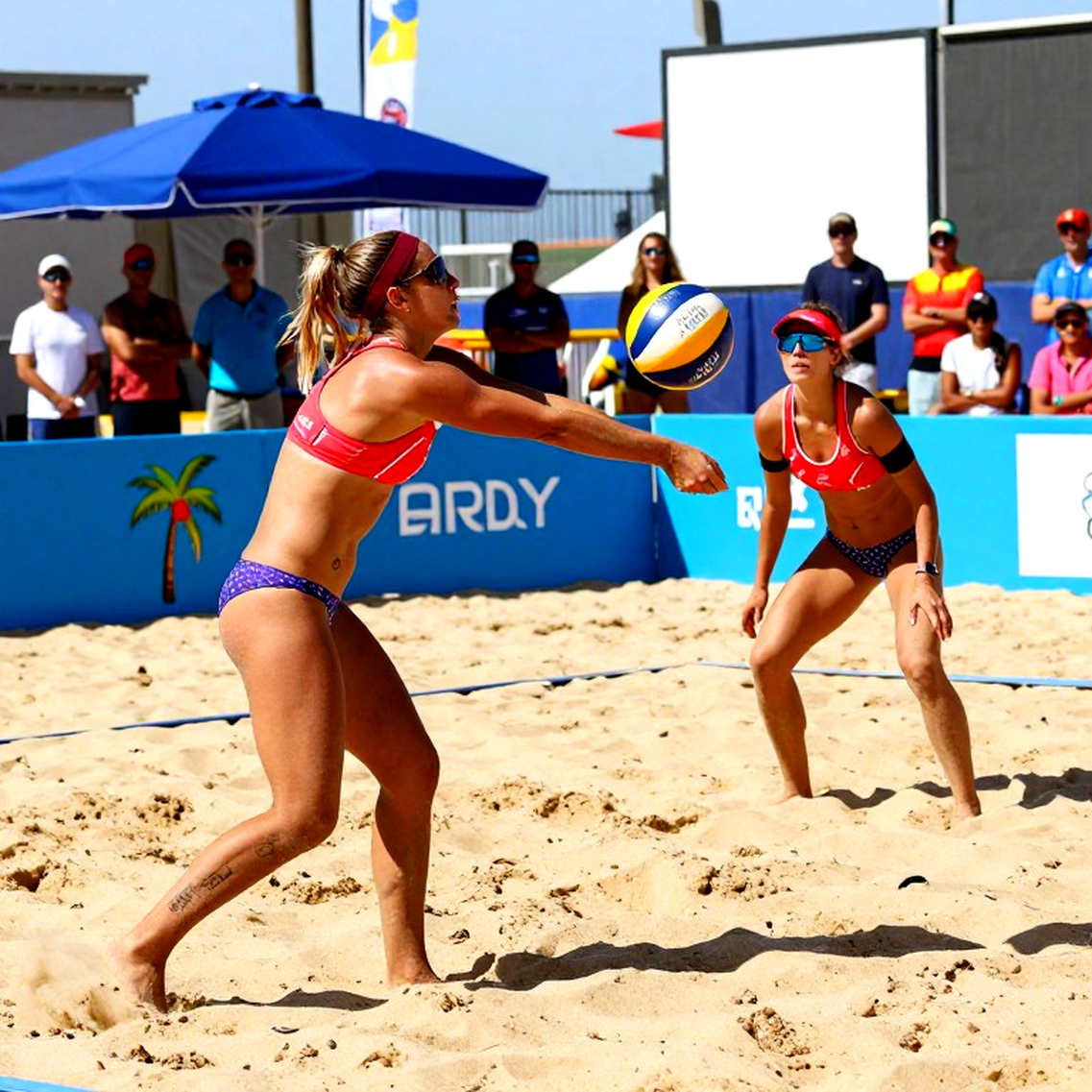
What the report does give you is telling. A total prize pool of nine million rupees, shared across every event and every medal. A 5pm inauguration — which means evening sessions, a sensible call given Karachi's heat and humidity. And the detail that matters most: the men contested a 20km walk. The women contested 5,000m.
I left the legacy desk to follow a track that had no guarantee — no league, no payroll, no year-round audience. That decision gave me a habit: in every report, find first the number the report left out. Here there are four of them, and they all sit at the same table.
One: the pace comparison. Elite women walkers cover 20km at somewhere between 4:15 and 4:30 per kilometre. Mahnoor is at 6:30. That is roughly two minutes per kilometre, and it was measured over 5,000m — a shorter distance flatters any walker's pace because fatigue has less time to accumulate. A pace that slow over five kilometres gets slower over twenty; that is not a linear decline, it is a steep one. There is no official world record for the 5,000m walk because it is not a World Athletics championship event at all. Best road efforts over five kilometres are quoted at around twenty minutes — I could not verify that figure, so I am holding it as an estimate, not a fact. A gap of at least twelve minutes.
Two: there is no qualifying standard to chase. This is the sharpest part. At international championships the women's walk is contested over 10km or 20km. The Paris 2026 women's 20km entry standard was 1:29:20. If Mahnoor's 6:30.5 per kilometre held across 20km — it will not — the time lands near 2:10. That is roughly forty minutes off an Olympic standard. Forty minutes is not a training gap, it is a different sport. It is five years of coaching, a rebuilt training block, and a system that measures time every week rather than a medal once a year.
For a regional benchmark, because a number without a benchmark is just a number: at the 2026 Commonwealth Games, India's Priyanka Goswami walked the 10,000m in 43:38.83 — about 4:22 per kilometre. The same pace, twice the distance, in a neighbouring country. I am not making this comparison to rank anyone. I am making it because nobody has offered a public answer to where this mark sits regionally. 32:32.40 is not a bad effort; it is an effort nobody bothered to measure against anything.
Three: the mark has no witness. In race walking the judging is the sport. Two rules govern it — contact (continuous ground contact) and the bent knee (the leg must straighten). Three red cards from three separate judges and you are disqualified. Which means a walk mark is built from three things: time, cards and splits. Here not one of the three is present. No cards, no cautions, no lap splits, no field size, no runner-up time. So what we are calling a performance is really a headline with a stopwatch behind it and no witness in front of it.
Four: the format itself is the diagnosis. Men's 20km, women's 5,000m. That asymmetry is not technical, it is structural. When a federation lacks depth in women's endurance walking, the programme gets shortened — 5,000m is where you go when the field is thin. This is an admission of a thin field, whether or not anyone admits it. And note: this is a design decision, not an accusation. Cutting 20km to 5,000m to save two days of schedule is easy. The real cost is that the championship now generates no data for 20km preparation at all. What you do not measure, you cannot improve.
Here I need to borrow a word and then hand it back. In football we talk about a depth chart — how many bodies you have at each position. I have learned to read the scoreboard and the balance sheet as one text, so the temptation to use the phrase here is strong. But a depth chart means nothing in athletics, because there is no league. That is exactly where the metaphor breaks. Every transfer window is a tactical room with louder agents and worse lighting — except athletics has no transfer window. The real contract here is not prize money. It is a job — the departmental teams of WAPDA, the Army, Railways, PIA. A player's form is not his biography; his salary slip is. In India I call this the quota-state payroll. In Pakistan the names change and the architecture does not: you are a government employee who happens to compete well, and your career is as secure as your department. That is why nobody here gets dropped for being out of form. They get transferred.
Nine million rupees sounds large. Divide it across every event and every medal. Then ask what a race walker got. This championship is not a prize ceremony, it is an annual audit — and the audit says money does not buy event depth, it buys one week of attention. Attention is the actual shortage. I saw that most clearly in Pune. January 2026, Balewadi — the Khelo India Youth Games, roughly ten thousand athletes, thirty-six states and union territories, eighteen disciplines. A sixteen-year-old girl from Kerala was running the 1500m in 4:32. In the same week FC Pune City was handing back its licence after five seasons. Pune taught me that a youth games and a dying franchise can share a week, and that nobody notices which one won.
Sindh's first gold should be read the same way: a historic first, arriving in the event with the lowest entry cost. The map is drawn by infrastructure, not population — and the first gold always comes through the cheapest door. Karachi holds twenty-five million people; Sindh's first athletics gold came in the 5,000m walk, an event that needs a road and a judge rather than an Olympic stadium. That is not coincidence. That is the geography of a budget.
Now the part I have to write and nobody will enjoy reading. "Sindh's first gold" is the story the federation needs. 32:32.40 is the story that survives after the meet. But when I called Germany's collapse early, the tactics room was empty — and that empty room taught me the lesson this trade sells least: write the prediction, and write alongside it the condition that would prove it wrong. A prediction without a falsifier is just an opinion that has been given a date.
So here are my conditions, public and undated, because the meet's own date is unverified:
If this race had twelve or more entrants and the runner-up walked faster than 33 minutes, my thin-field claim dies. Then I have to write that I mistook suspicion for reporting once again, and I have been repeating that error since 2026.

If Mahnoor is sixteen or seventeen and this event was in fact a junior or youth category folded into the senior programme, then 32:32 is not alarming at all — it is a developmental mark, not a poor one. I do not have her age. That is my weakness, not the report's, and I would rather print it than hide it.
If Karachi's heat suppressed the times — a 5pm inauguration, evening sessions, that is the signal — then some of the pace belongs to the weather, not the athlete. Walking 5,000m in humidity is a different event from walking it in a cool night.
And the biggest condition: if within two years Mahnoor steps up to 10km and breaks 1:02, my entire "no international pathway" paragraph goes in the bin. I would like to watch it go in the bin. Genuinely. In this trade that is the rare good day, when you are wrong on the record.
One more thing I have to write, because I came in from outside and outsiders find this easiest: I am not here to explain Karachi's akharas or Punjab's camps. I am citing Pakistani reporters and local coverage as sources, not as scenery. If this piece leaves a reader feeling that an American-born man is translating their sport back to them, I have failed. My only job is this: put two numbers on the same table and see which one holds.
The next question is not a medal. The next question is: when does Sindh get its second gold, and in which event? If the answer next year is the 5,000m walk again, then the championship produced a champion, not a programme. If the answer is 10km — with splits, cards and a real field — then 32:32.40 was only a beginning, and I will read this article in 2027 with some embarrassment. The nine million rupees will be spent; that is certain. The only question is how many of them turn into a coach's salary.